A short 1-on-1 course for the person deciding what their company does with AI*
§ 01 — How it works
Three steps. One outcome: you decide, first-hand.
The format is flexible, shaped around your calendar — but all told it takes no more than two days of your time.
The primer.
What the models are, how they connect to your data and tools, where they break, and what's safe. Plain language, no engineering background needed.
You build.
Something you and your team actually need — with your own hands, in hours, one on one with me next to you.
You decide.
Vendor decks and AI proposals stop being opaque. The direction you set for your company is your own, grounded in something you built.
§ 02 — What you leave with
Not a certificate. Judgement.
§ 03 — The proof
Nine things built this way, each in about two hours.
All built by me, with AI, on dummy data. This is what "you build something" looks like after an afternoon, not after a programme. Click any to try it.
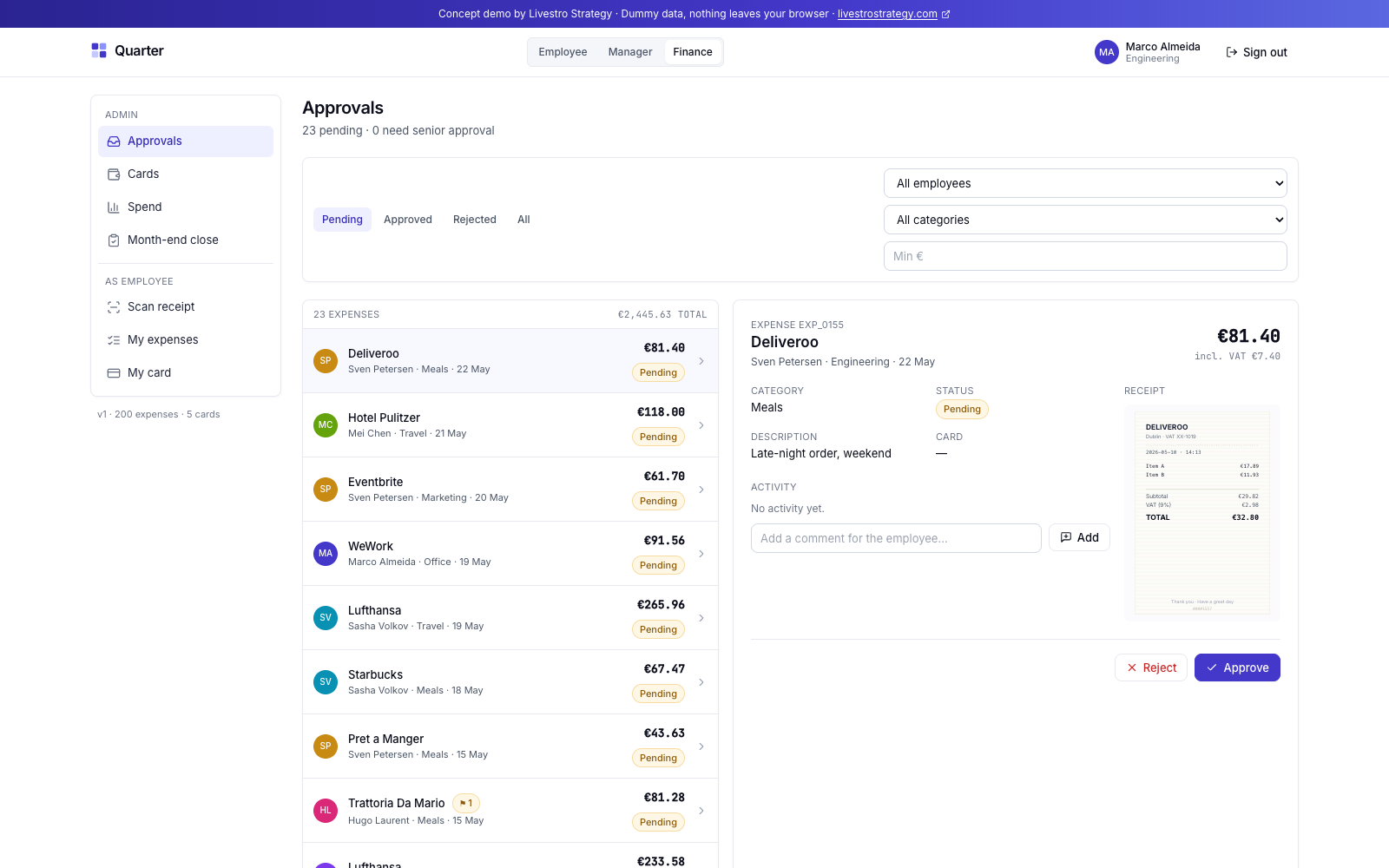 Quarter
Expense management
Where approval time goes, and which claims need a human.
Quarter
Expense management
Where approval time goes, and which claims need a human.
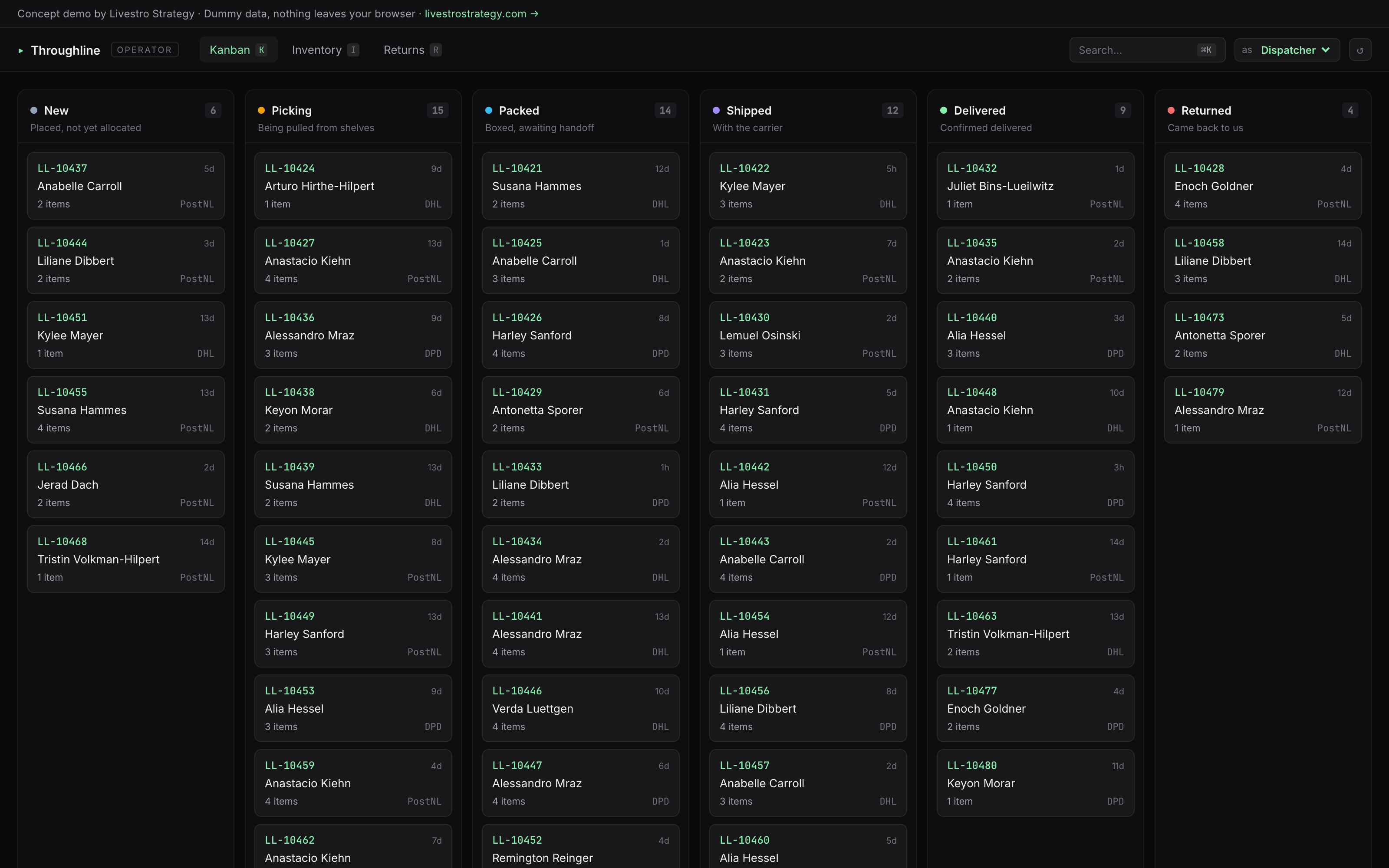 Throughline
Order operations
Spotting the stuck orders before the customer calls.
Throughline
Order operations
Spotting the stuck orders before the customer calls.
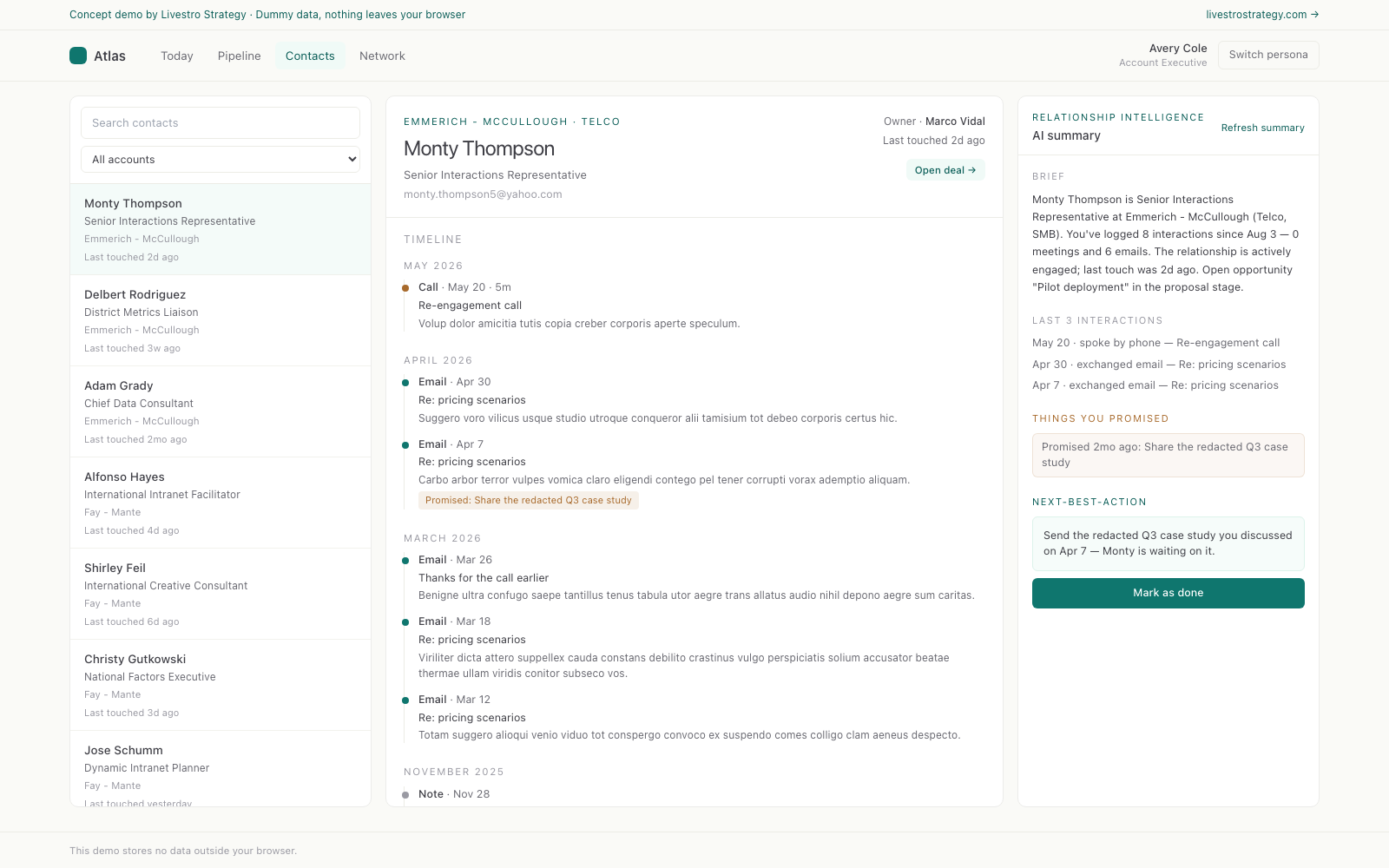 Atlas
Sales CRM
What the relationship actually looks like before the call.
Atlas
Sales CRM
What the relationship actually looks like before the call.
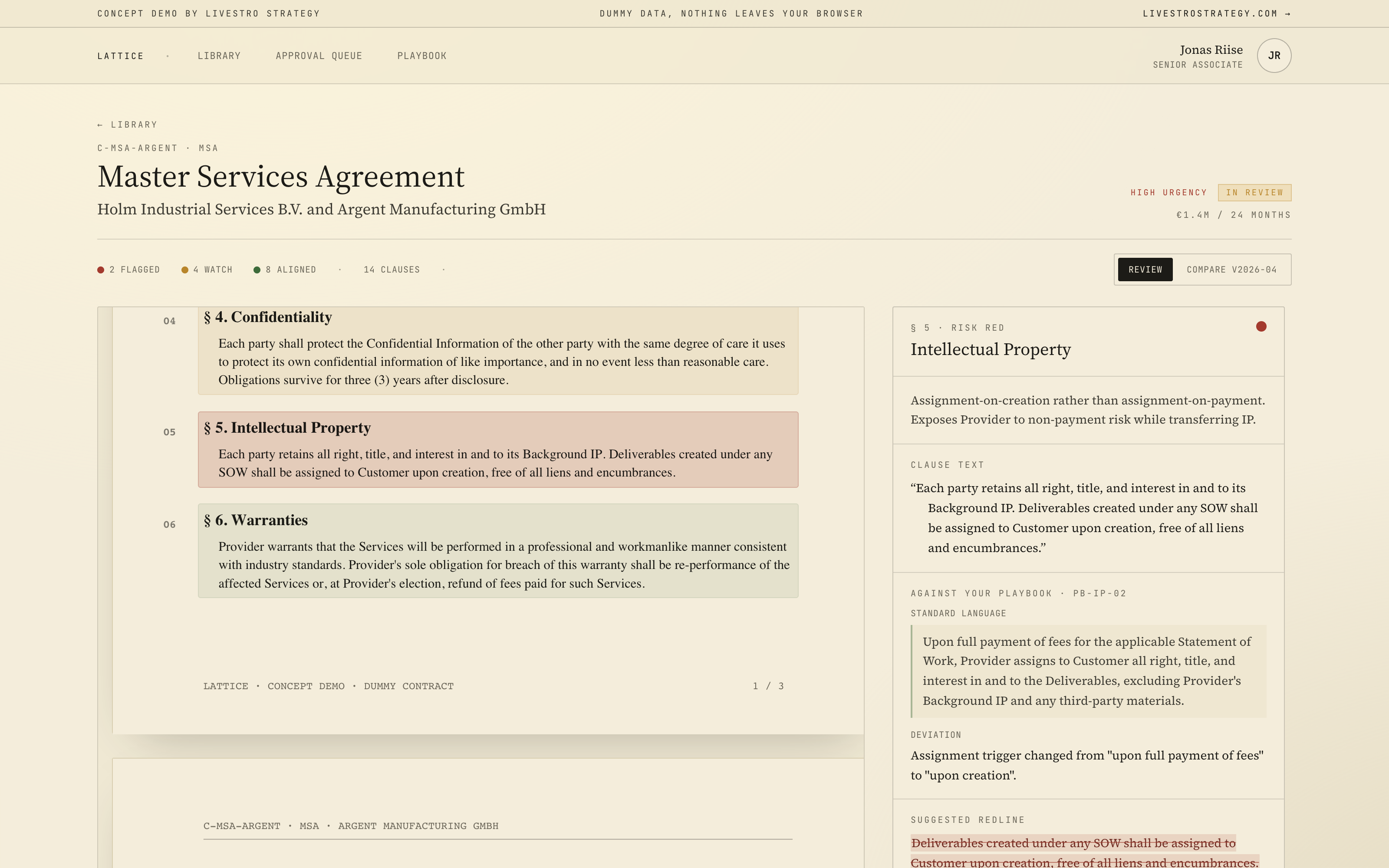 Lattice
Contract review
Which clauses carry risk, before legal gets it.
Lattice
Contract review
Which clauses carry risk, before legal gets it.
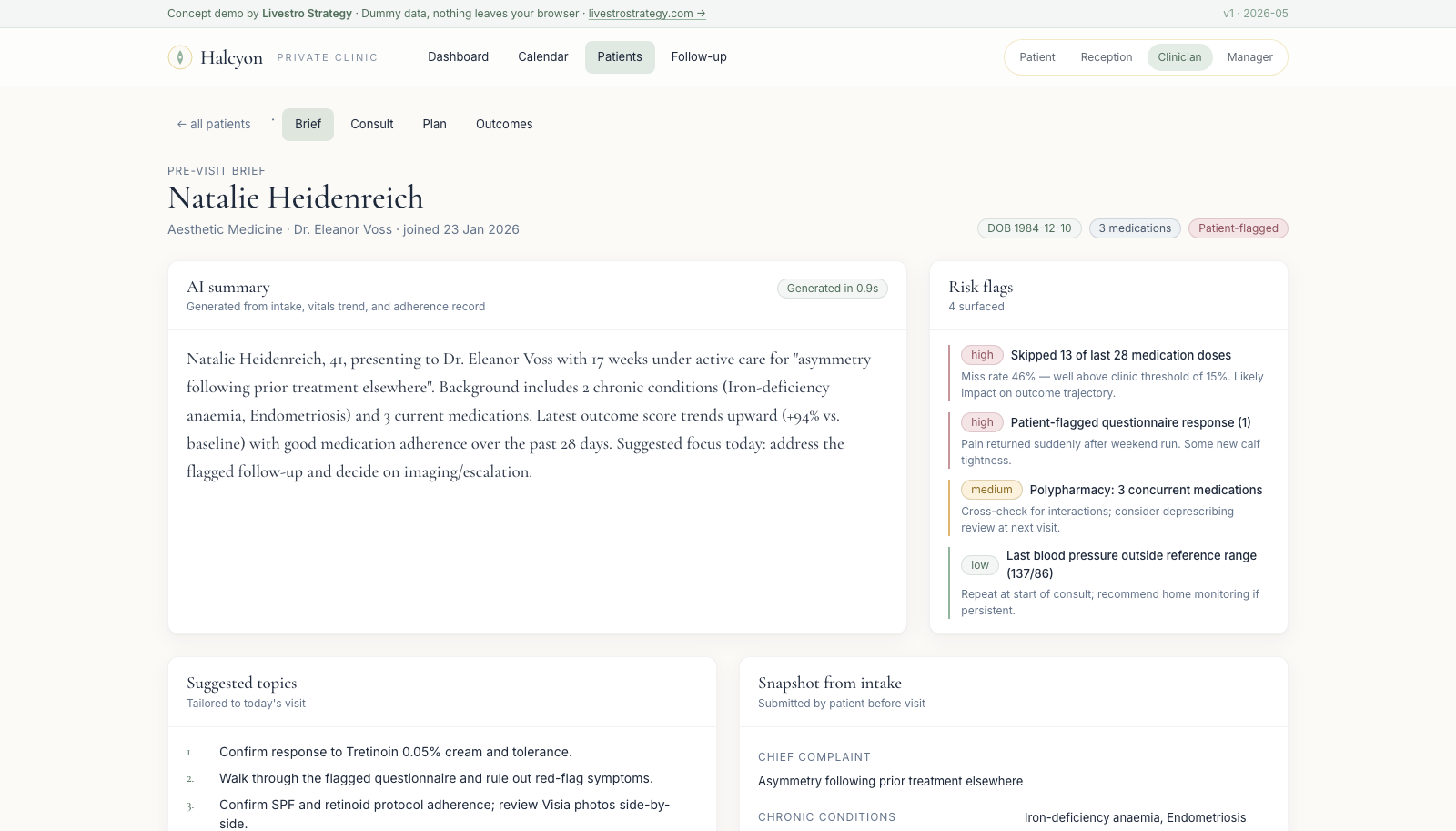 Halcyon
Clinic journey
What the clinician should know before the patient walks in.
Halcyon
Clinic journey
What the clinician should know before the patient walks in.
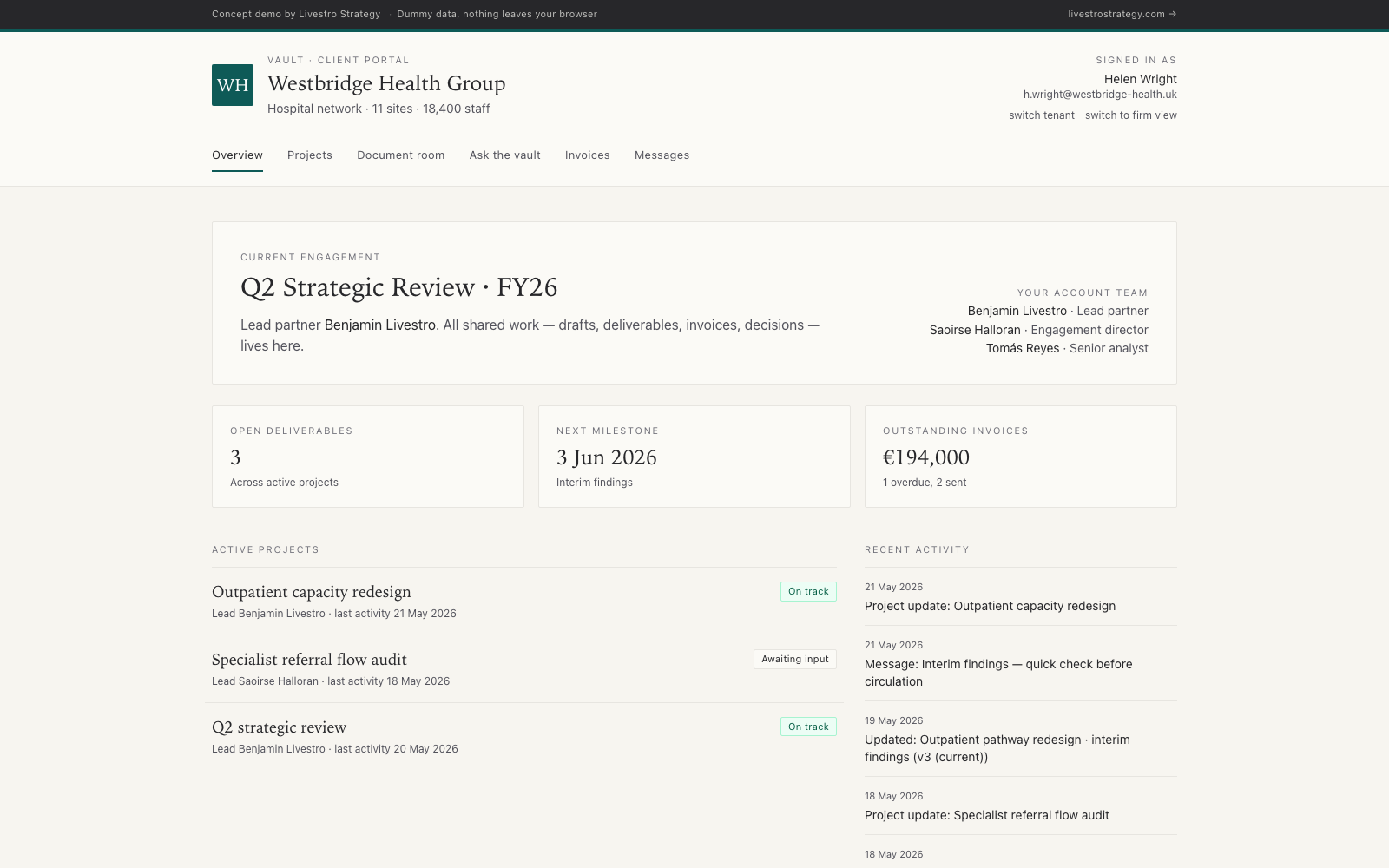 Vault
Client portal
One portal, rebranded per client, without a dev team.
Vault
Client portal
One portal, rebranded per client, without a dev team.
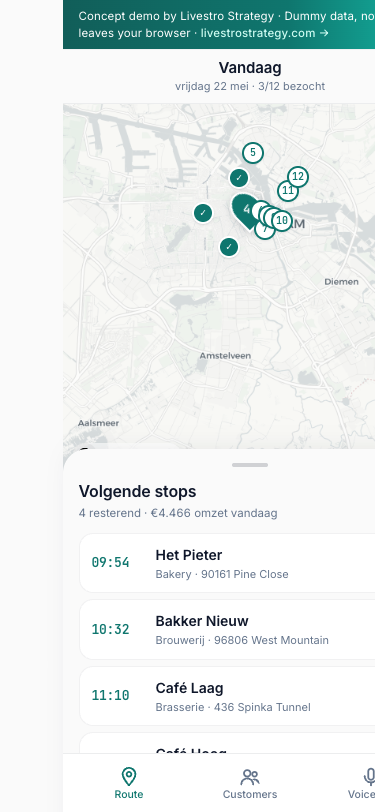 Beacon
Field sales · phone
Today's route and what to say at each stop.
Beacon
Field sales · phone
Today's route and what to say at each stop.
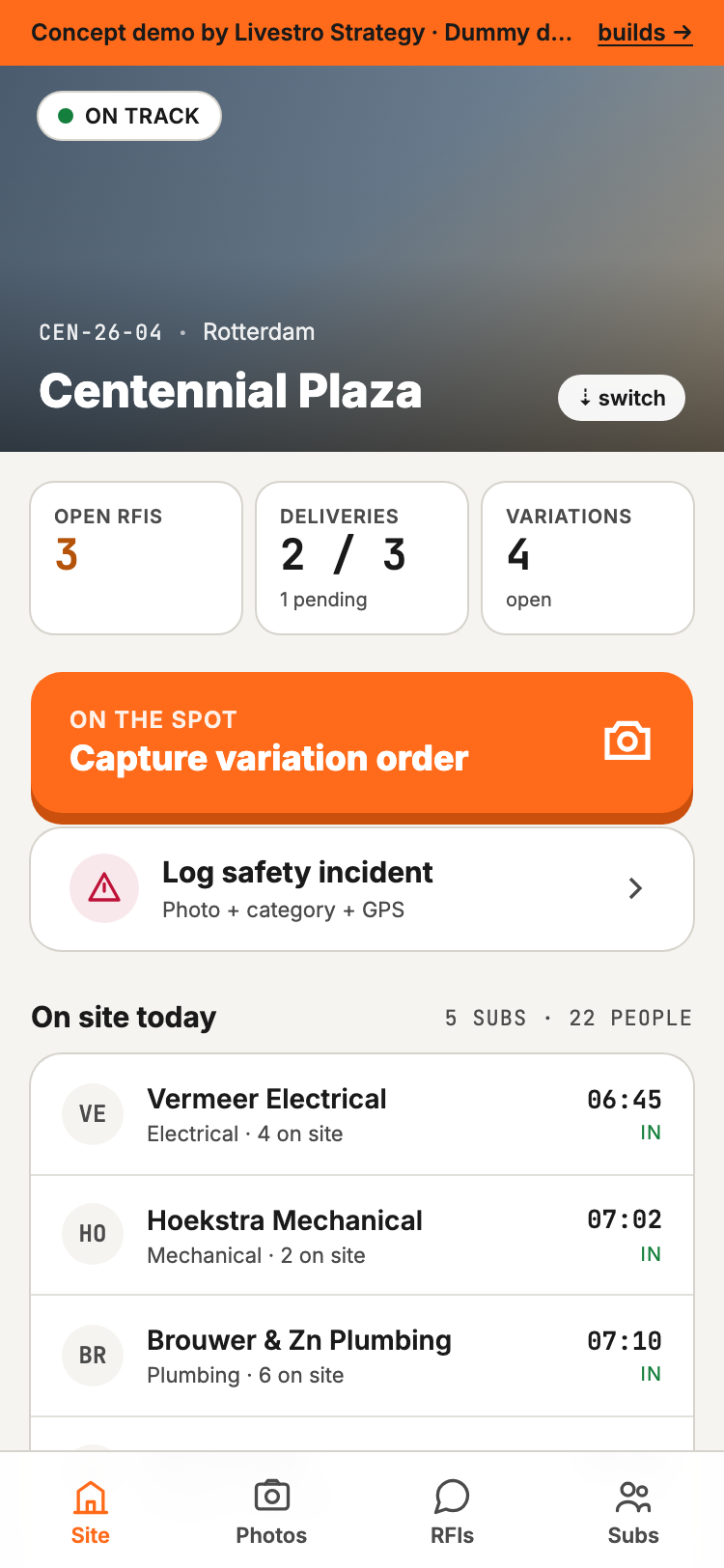 Sitewise
Construction · phone
Capturing site variations the moment they happen.
Sitewise
Construction · phone
Capturing site variations the moment they happen.
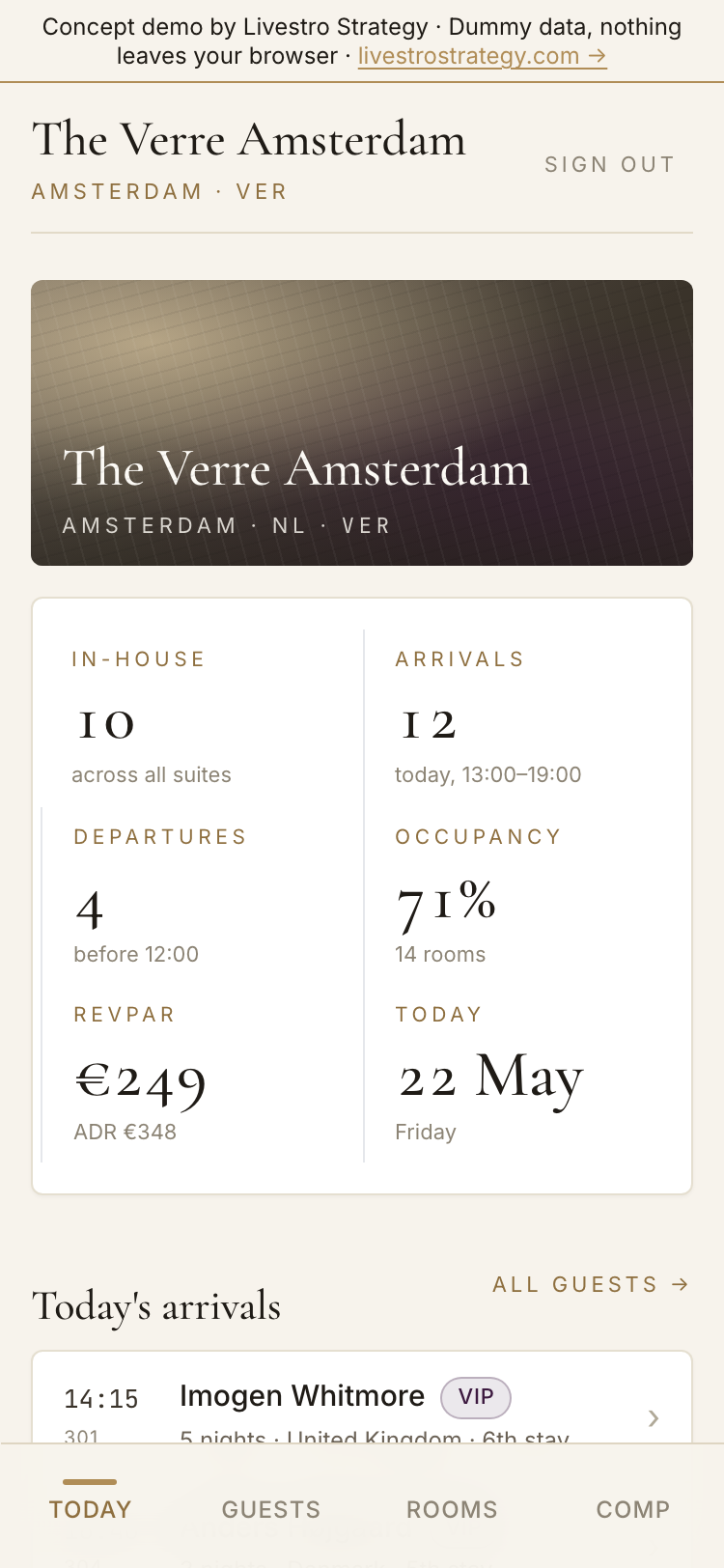 Portico
Hotel GM · phone
The morning picture: occupancy, arrivals, what needs attention.
Portico
Hotel GM · phone
The morning picture: occupancy, arrivals, what needs attention.
§ 04 — Who you'll work with
Benjamin Livestro*
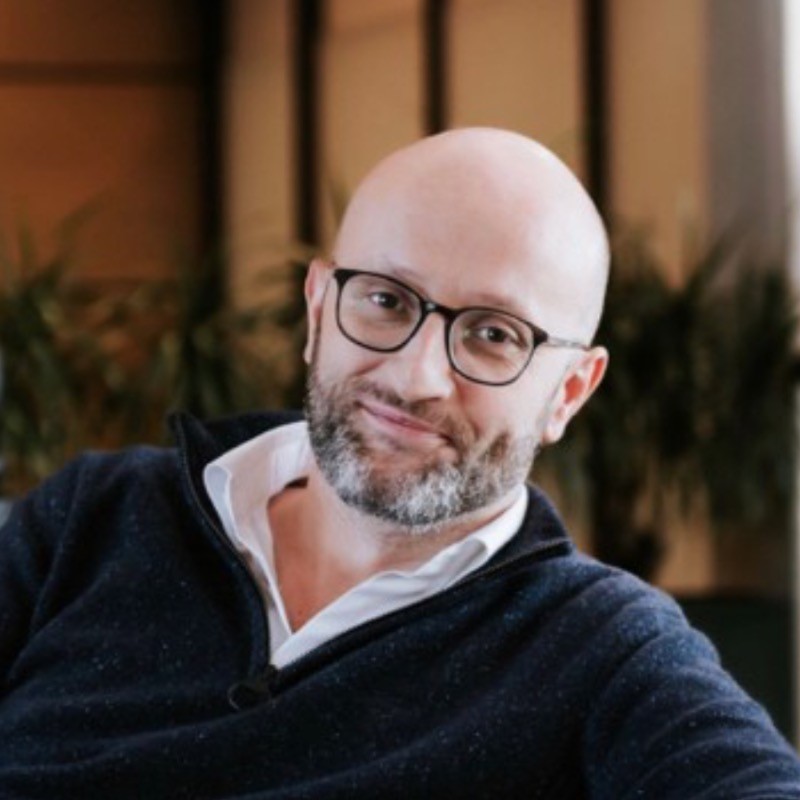
I spent years heading innovation and digital inside large multinationals. I built all nine demos on this page myself — and in the course, I sit next to you while you build yours.